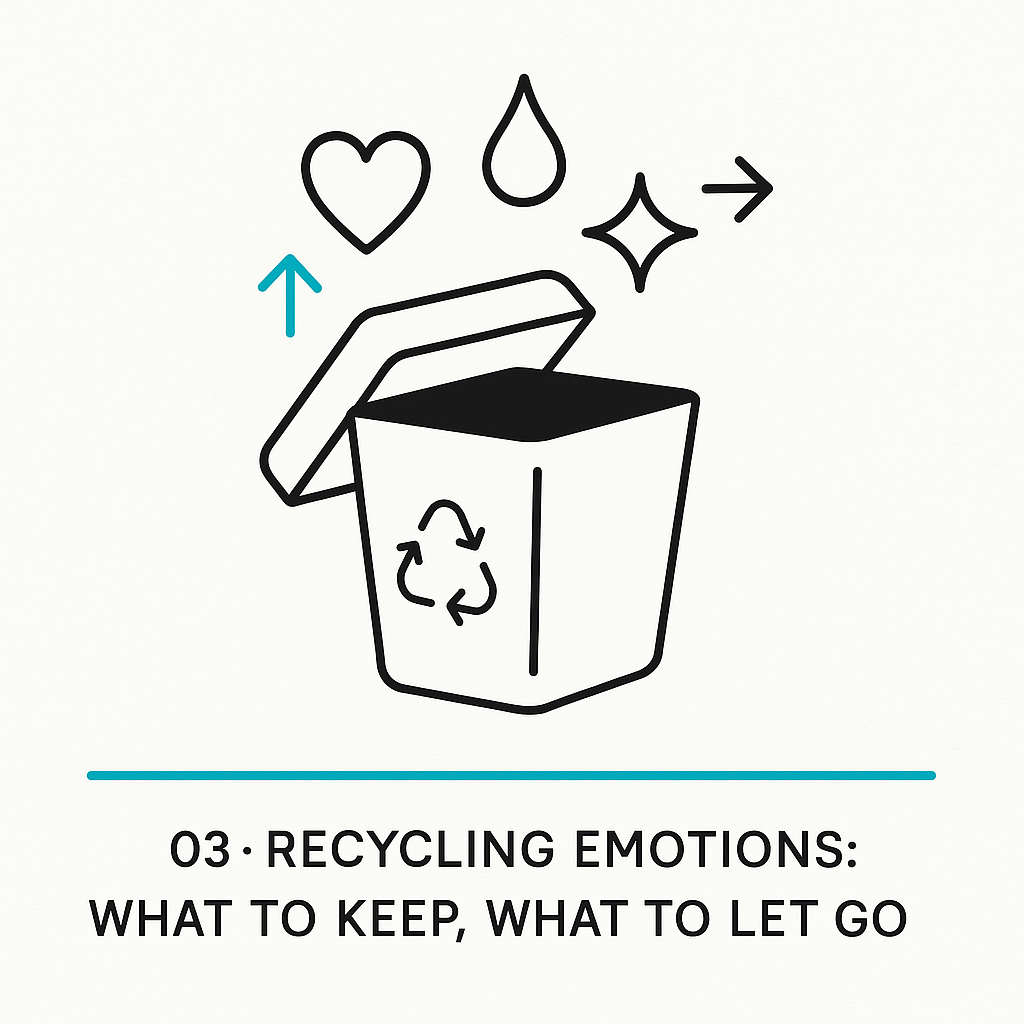
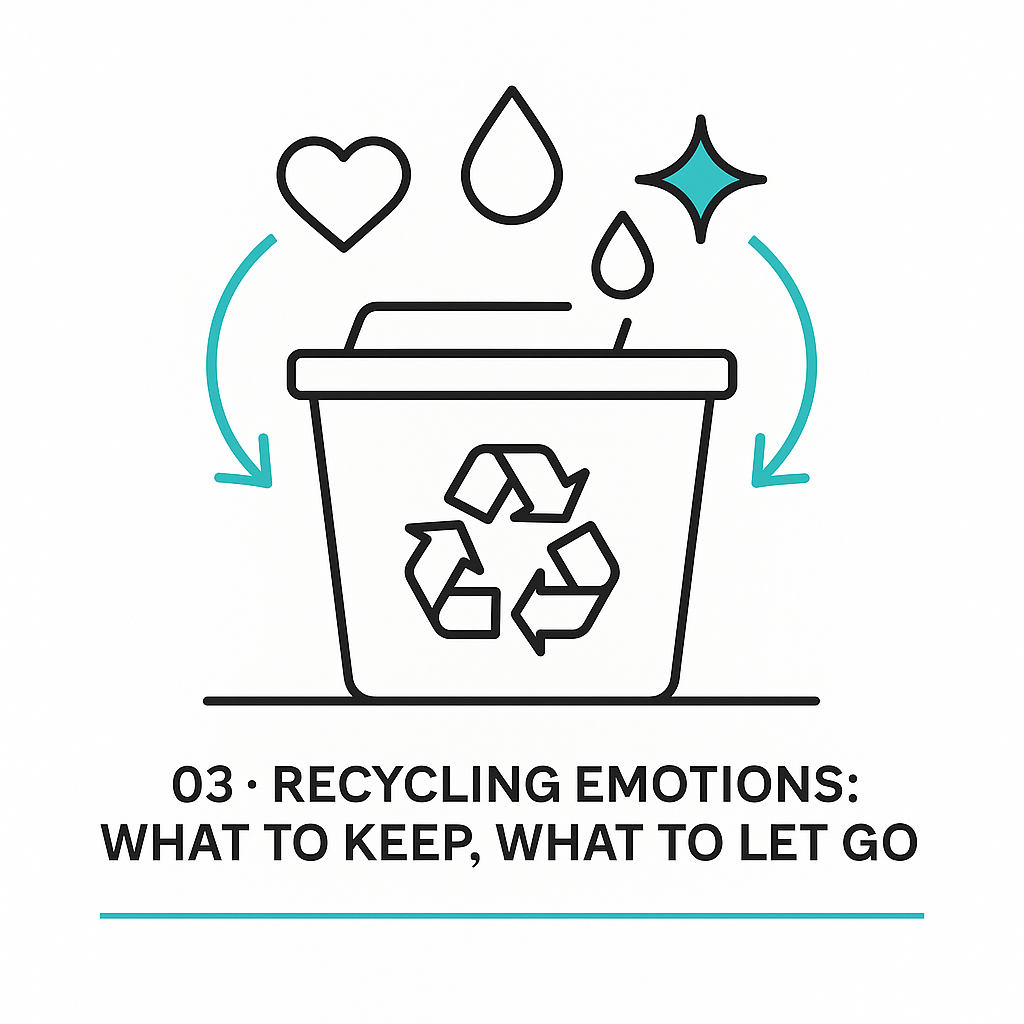
3 – Recycling Emotions: What to Keep, What to Let Go
Recycling emotions helps clear the mind and open space for renewal.
Emotions never simply disappear. Sometimes they stay quiet; at other times they press heavily, waiting to be felt. Inside each of us, feelings pile up like old materials in a workshop. Some can be reused for something meaningful, while others only take up space and block the light.
Learning to reuse emotions means knowing what still helps and what has reached its limit. Some feelings give strength. Joy and gratitude refill energy. Love multiplies the more it’s shared. Even mistakes, once painful, become useful notes for the future.
However, other emotions start to wear you down. Old fears keep you frozen where you no longer belong. Guilt that once warned you now wastes strength. Resentment spreads until everything inside feels tense.
Change begins when you stop labeling emotions as good or bad and start seeing them as raw material. Anger can turn into strength. Sadness can turn into kindness. Disappointment can turn into direction. The aim isn’t to throw emotions away but to give them a second life.
When you release what no longer serves you, as a result you create space for new energy. In fact, a cluttered inner space leaves no room for creativity or calm. Once you begin clearing and reusing emotions, everything flows easier—the mind feels lighter, and life starts to move again. Therefore, letting go isn’t losing; it’s smart care.
🧩 FAQ – Quick Questions
Q1: Why do emotions seem to stay forever?
The mind and body keep them as signals. Until you understand the message, they stay active.
Q2: How do I know which ones to keep?
Keep the emotions that bring energy, clarity, or connection. Let go of those that repeat the same drain.
Q3: What’s the difference between releasing and avoiding?
Avoiding pushes feelings deeper. Releasing means hearing the message, learning from it, and moving forward.
🔧 How-to – How to Practice Recycling Emotions
Step 1: Sit quietly and name one emotion that feels heavy.
Step 2: Write down what message it carries—protection, memory, or habit?
Step 3: Label it: fuel or rust.
Step 4: If it’s fuel, keep using it consciously. If it’s rust, imagine releasing it—through writing, deep breathing, or a small act such as tearing a page or washing your hands.
Step 5: Afterwards, notice which new feeling appears in the empty space.
💬 In Other Words
Your emotions are materials waiting for use. Keep those that feed life and recycle the rest into lessons or energy. When you clear emotional clutter, you open space for peace, focus, and movement.
🔗 Internal Links (PsyGarage site)
3. Time as a Partner in the Garage
🌍 External Links (Authoritative psychology resources)
)