Consciousness is the engine that keeps the whole system alive. You don’t always see it, but it’s there, running non-stop. And like every engine, it can’t run only on fuel — it also needs silence, pauses, and rhythm.
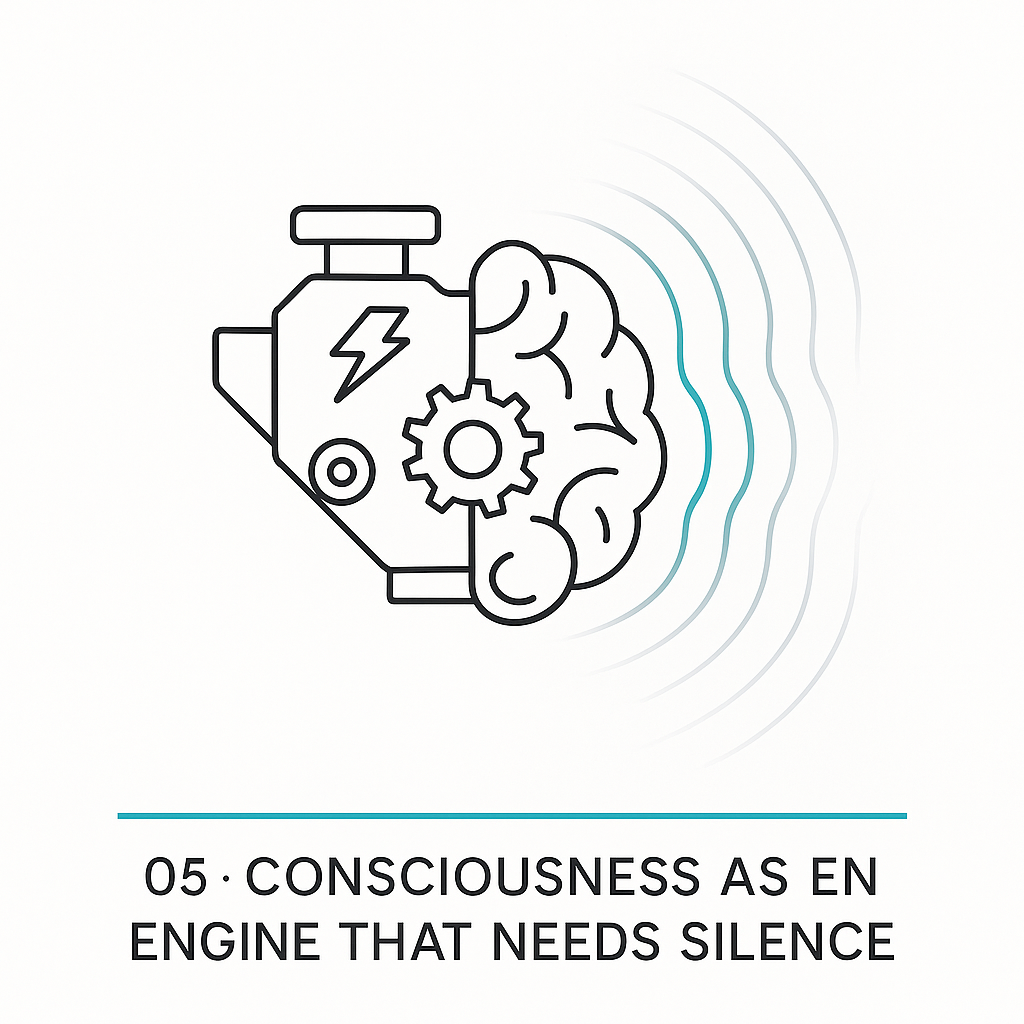
The engine of consciousness
- It’s the force that drives our actions.
- It’s the center that connects thoughts, memories, and emotions.
- It’s the compass that shows whether we’re moving forward or just running in circles.
Why does it need silence?
An engine doesn’t last if it’s always in the red zone. Silence is like the cool air that keeps it from overheating:
- It gives space to hear your own steering.
- It reduces the “noise” that clouds decisions.
- It brings clarity, like a service that removes dust.
Small doses of silence
You don’t always need perfect quiet. Even small moments count:
- Two minutes without music, without a phone.
- A walk with only the sound of your steps.
- A glance out the window without thinking anything.
A small reminder
Silence is not emptiness — it’s a different kind of fuel. Without it, consciousness tires, and the engine loses its strength.
👉 Try this today: Give your engine two minutes of silence. It may be the most useful fuel of the day.
In other words…
Your mind works all the time, even when you don’t notice. To stay clear and focused, it needs quiet moments just as much as it needs activity. A few minutes of silence help you slow down, see things more clearly, and feel more balanced. It’s a simple pause that gives your thoughts and emotions space to breathe.
- 🧩 FAQ Block — “Quick Questions”
Q1: Why is silence important for mental clarity?
Silence gives the brain a break from constant stimulation. Even a few quiet minutes can help restore focus and reduce stress.
Q2: How often should I take silent pauses?
Start with two or three short pauses each day — even one or two minutes can make a difference.
Q3: What if I find silence uncomfortable?
That’s normal. Try easing in with gentle moments — like sitting quietly, walking, or simply listening to natural sounds. Over time, silence feels more natural.
🔧 How-to — “Quick Reset: Two Minutes of Silence”
Step 1: Find a quiet spot where you won’t be interrupted.
Step 2: Turn off all screens, music, and notifications.
Step 3: Sit comfortably and close your eyes if you like.
Step 4: Notice your breathing — let thoughts pass without following them.
Step 5: After two minutes, open your eyes and take one calm, deep breath before continuing your day.
✅ Repeat this once or twice a day to refresh your focus and emotional balance.
🔗 Internal Links (to add when ready)
Article 6 – Hidden Mental Tools
Article 8 – Anxiety: The Red Warning Light
🔗 Suggested Outbound Links (relevant, reliable)
- “Are There Health Benefits to Silence? Research Says Yes” — Healthline. Covers studies showing that silence helps reduce heart rate, blood pressure, cortisol and improves focus. Healthline
Link: https://www.healthline.com/health/mind-body/physical-and-mental-health-benefits-of-silence - “The Benefits of Silence and Solitude” — Piedmont Healthcare. Highlights how silence gives clarity, helps emotional processing, and supports better decision-making and healing. Piedmont
Link: https://www.piedmont.org/living-real-change/the-benefits-of-silence-and-solitude - “An Ode to Silence: Why You Need It in Your Life” — Cleveland Clinic. Explains how quiet moments allow self-reflection, reduce stress response, and help regulate the nervous system. Cleveland Clinic
Link: https://health.clevelandclinic.org/why-you-need-more-silence-in-your-life - “The Hidden Benefits of Silence” — Psych Central. Covers a range of benefits such as mindfulness, self-awareness, brain cell growth, stress relief, improved concentration. Psych Central
Link: https://psychcentral.com/blog/the-hidden-benefits-of-silence - “Silence and its effects on the autonomic nervous system” — academic article by Donelli D et al., 2023. Looks at how inner silence influences the ventral vagus nerve, reduces sympathetic activity and physiological stress. ScienceDirect
Link (abstract): https://www.sciencedirect.com/science/article/abs/pii/S0079612323000699
- 6. https://www.healthline.com/health/mind-body/physical-and-mental-health-benefits-of-silence — Are There Health Benefits to Silence? Research Says Yes Healthline
- 7.https://www.genesishcs.org/wellness/behavioral-health/embrace-the-silence — Embrace the Silence genesishcs.org